
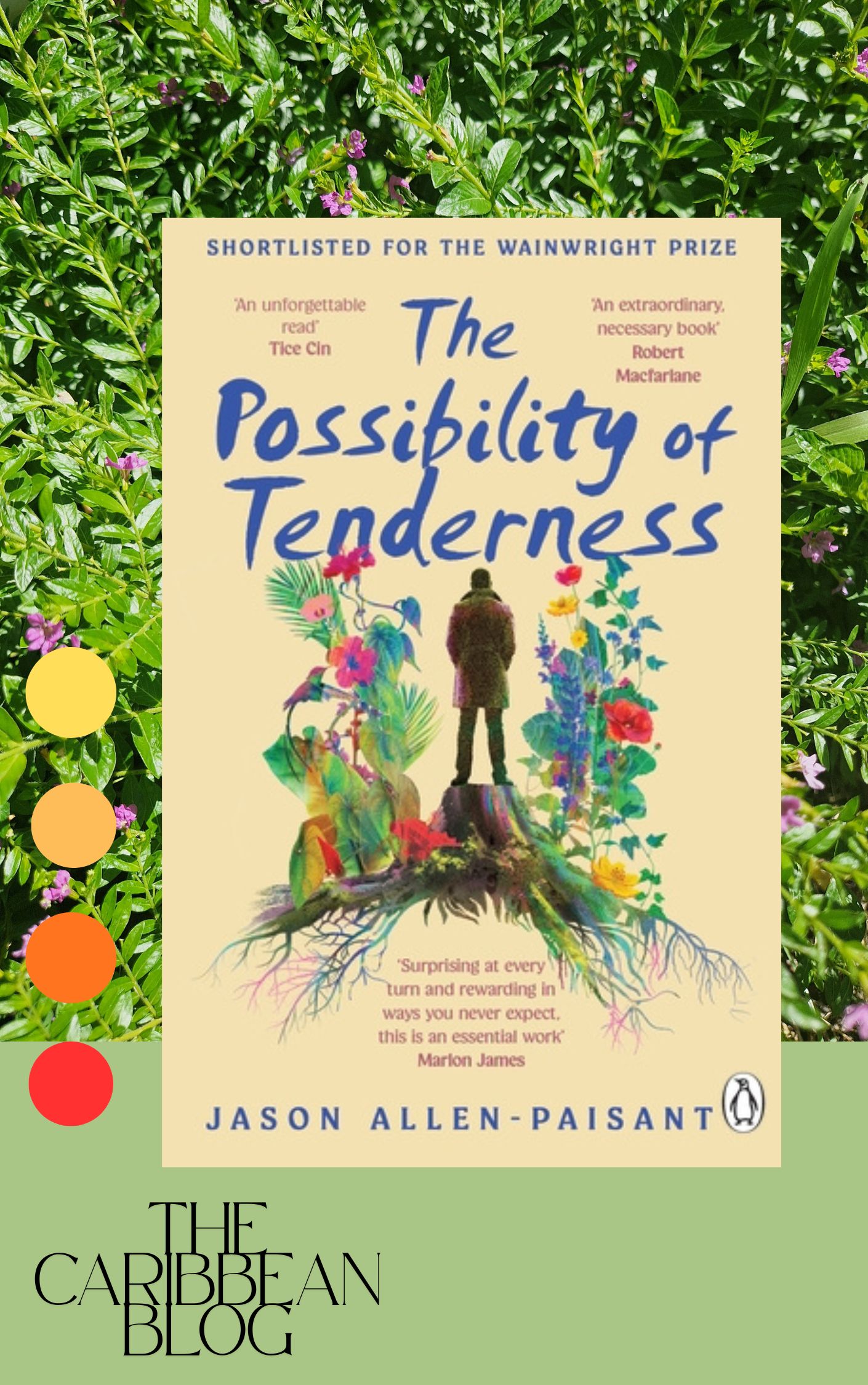

The author explores his history and relationship with nature and bush knowledge. Reflecting on his childhood and visiting and exploring Coffee Grove as a adult. Rediscovering his personal connection to bush and plants. Early memories and knowledge from living his early years with his grandmother ‘Mama’. Alongside his life story he is also researching bush knowledge and people’s daily lifestyle with the bush. He discusses his experience of connecting to nature in England. The privilege of being able to have the time and space to reconnect with nature. He has been currently reconnecting through walks and talking to people about plant knowledge.
The possibility of tenderness is a key theme of this book. Reclaiming slowness and connection to nature. Coming from fast living, violence against Black bodies, and busyness of the West. Allen-Paisant resists the chaos of the West by reclaiming his right to being slow, and reconnect to the earth. By reconnecting he discovers the power of plants in many peoples lives across the Caribbean and partly in England. Through this lens the unspoken and undocumented history of the Caribbean comes to light. Especially when looking at land ownership and the type of land allowed by the government for country people to own is deemed as ‘unuseable’ land. However, talking to the people who live on this type of land shows that their is no land that is unusable. The different approaches to nature and farming changes the conversation around land and history.
Another theme in this book was the relationship between nature and people in England. The majority of land in England is privately owned. This impacts the average citizen lack of experience and connection to nature which leads to further societial issues like food disconnection, mental health issues etc.
This book confirms another Caribbean island that has a vital connection and experiences of plant knowledge and healing. Allen-Paisant shows that plant life is vital to Caribbean’s history and present. The legacy of plant knowledge is connected to colonial society (negative and positive), and Indigenous knowledge from Africa and the Americas. Knowledge is merged and moved across the world to meet in slavery conditions in the Caribbean and the Americas.
The author captured his experience of revisiting various places from his childhood which lead to talking and rediscovering his own history. That I relate to as visiting the places of your family and how the land is a memory keeper of past family and ancestors. Made me see the Caribbean and our culture in a different way. The quote below is just one example of this shift in perspective I have experienced since reading this book. This is a element I have personally noted in our culture and I loved how the author framed this character of Caribbean culture.
[…]trading news about the dead is just a way of catching up. People talk a lot about their dead here. Why is talking about the dead a way of bonding among the my hillside people? In the way people love to dwell on the lives of the ancestors, bring them into conversation, you get the sensation that the departed ones are still a part of things. They may avoid confronting unspoken narratives, but invoking the names and stories of the deceased is their way of honouring them – page 39
I learnt that the history of plants and how their knowledge is past down is important, and can lead to interesting stories and histories. How a plant has the name it is known by and how it is usually connected to the healing properties. I also didn’t know about the faith/spiritual connection with plants, when not associated with Obeah and African ancestral practices, focusing on dreams. How in people’s dreams the remedy comes through by dreams and includes knowledge they don’t know initially. The remedy is revealed and communicated and has the healing result.
I learnt the influence of plants in history to impact the Caribbean and the UK. How the wealthy built in the Caribbean through Slavery had enabled the wealthy to purchase the majority of land across the UK. This has impacted the average UK person connection and relationship with nature. I never made that direct connection of colonial wealth and land ownership in the UK. As someone who lives and walks in the UK’s nature spaces, the large of amount of space in the UK that is inaccessible to everyone due to ownership has been enlightening and will change how I see the countryside in the UK. It is also interesting to place plants as the focus of history. How certain plants that only grow in certain areas, conditions, and countries impact how people live, work and changes the whole economy and landscape.



Leave a Reply